

GEVAUDAN
Grapes, Apples & Ewer
Grapes, Apples & Ewer
 Free shipping over $200
- Ships within 3–5 business days
- 14-day returns on in-stock items

Almost Claimed — Only 1 Remaining
Sold — view similar- Ships from our shop in New Preston, Connecticut
Couldn't load pickup availability
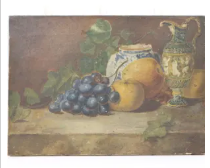
Grapes, apples, a ewer and a fold of linen. Nineteenth-century French, oil on canvas.
A ewer in a still life is never only a jug. In the Dutch and Flemish pictures the French inherited this from, metal and glass were included because they were difficult — the painter put them in to show he could handle reflection, and the buyer understood the demonstration. By the nineteenth century the flourish had relaxed into something domestic. What is left is a table, seen close, with the light low and warm, at the moment just before a meal or just after one. The umbers are deep enough that the few highlights do most of the work.
This was painted to be lived with rather than looked at across a room, which is the useful thing to know when hanging it. It rewards a short viewing distance — a hallway at eye level, a kitchen, the wall beside where somebody actually sits.
Details
Oil on canvas
19th century, French
14 l × 10 h × ¾ d in
Original aged patina