

GEVAUDAN
Duck, Pheasant & Partridge
Duck, Pheasant & Partridge
 Free shipping over $200
- Ships within 3–5 business days
- 14-day returns on in-stock items

Almost Claimed — Only 1 Remaining
Sold — view similar- Ships from our shop in New Preston, Connecticut
Couldn't load pickup availability
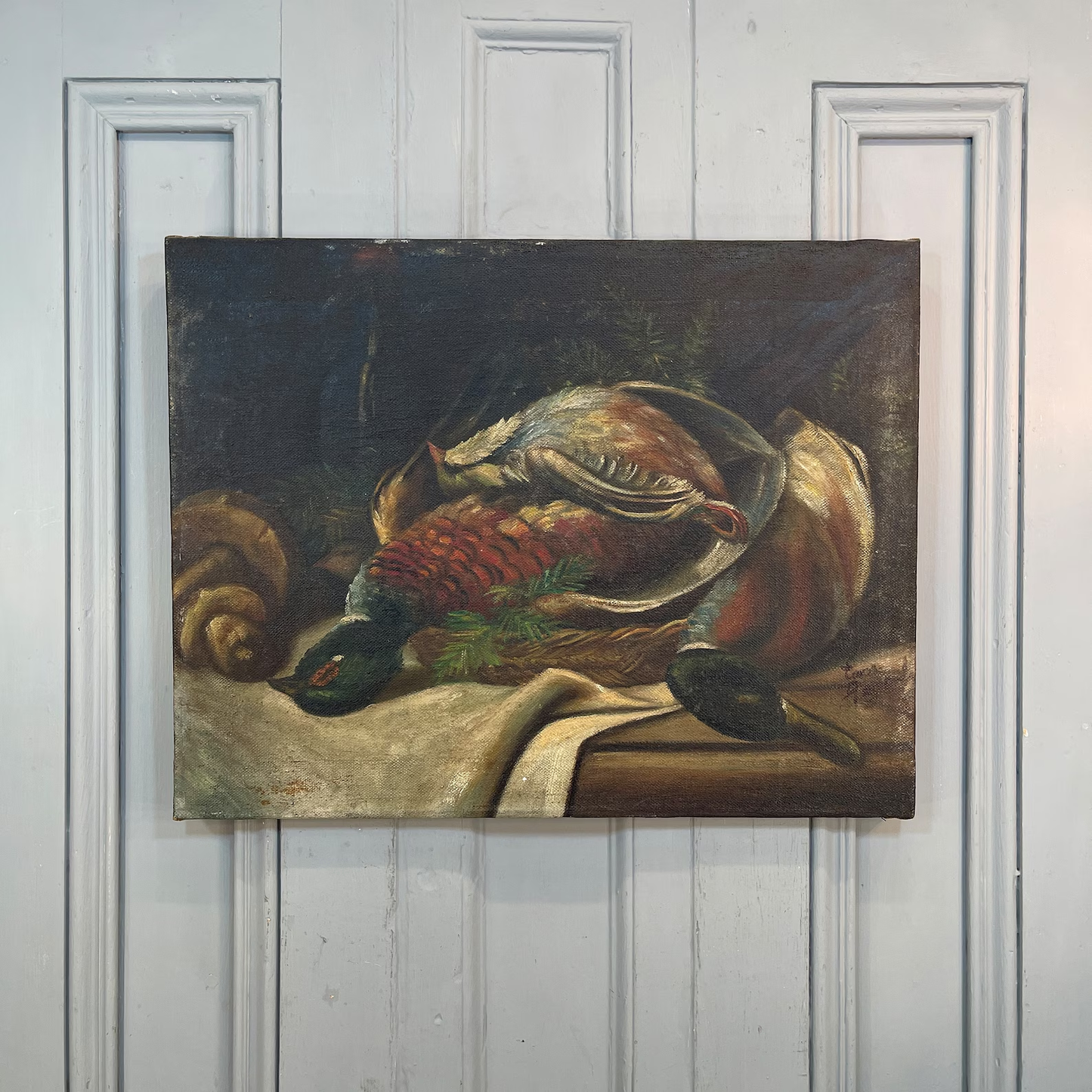
Duck, pheasant and partridge against a dark, atmospheric ground. French School, around 1920, signed at the lower right. At 23 by 18 inches it is the size that was meant to hold a wall rather than decorate a corner.
Three birds together is a composition, not a catch. The painter is showing range — the duck’s heavy body, the pheasant’s long patterned tail, the compact grey of the partridge — and the arrangement descends directly from the eighteenth-century game pieces of Jean-Baptiste Oudry and the painters who followed him, where variety was the point and the birds were posed with care against a shadowed ground.
What is striking about a 1920 date is that the genre was by then thoroughly old-fashioned, and people went on buying it anyway. The dining-room game piece outlived Impressionism, Fauvism and most of what came after, because it was never really about painting. It was about what a room was for.
Details
Oil on canvas
French School, circa 1920
Signed lower right
23 × 18 in