


Brizon
Velvet Applique Throw Pillow Cover
Velvet Applique Throw Pillow Cover
 Free shipping over $200
- Ships within 3–5 business days
- 14-day returns on in-stock items

- Ships from our shop in New Preston, Connecticut
Couldn't load pickup availability


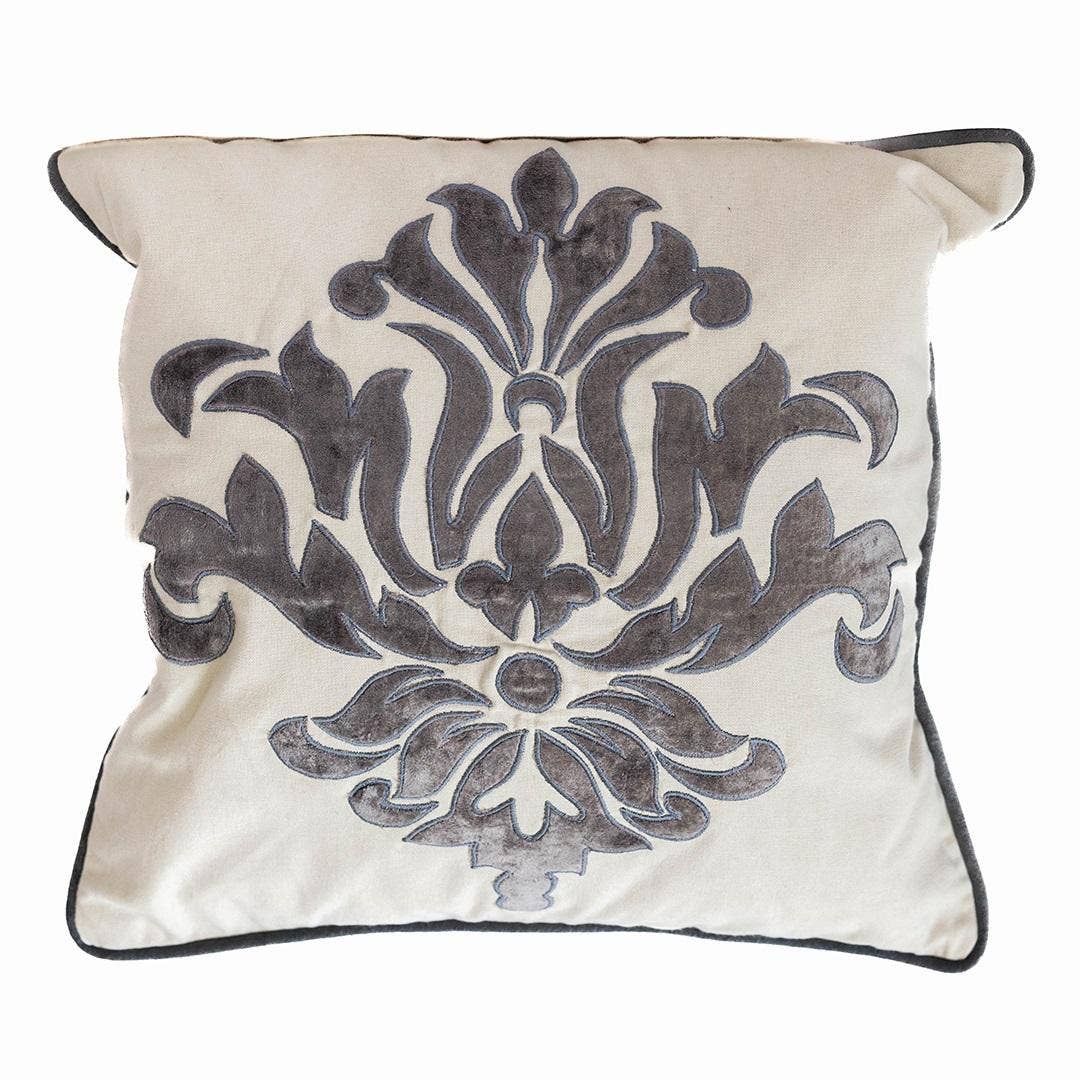
A cushion cover in beige and grey: a cotton ground with a velvet floral appliqué laid over it.
Appliqué is worth understanding rather than skimming past, because it explains why this looks the way it does. The word is from the French appliquer, to put on, and the technique is exactly that: shapes are cut from one cloth and stitched onto a base fabric, rather than being woven in or printed on. It is not embroidery — embroidery builds a design out of stitches, where appliqué builds it out of cloth.
And it most likely began as mending. The technique seems to have arisen independently in many parts of the world out of the practice of covering a tear with a small patch of cloth; the oldest surviving Indian form, the Pipili chandua of Odisha, goes back to the twelfth century. A repair that became an ornament, which is a pattern you will find all over this shop.
The choice of velvet for the motif on a cotton ground is the whole design. Velvet has a pile and cotton does not, so the flowers stand physically off the surface and take light differently from every angle — a printed version of the same pattern would be flat and dead by comparison. It is also why the piece reads as quiet from across a room and detailed up close.
Beige and grey, so it will sit with almost anything.
Details
Cotton ground with velvet appliqué
Beige and grey
Cover only